Meryton
Meryton is the small market town in Hertfordshire that forms the social and commercial hub for the Bennet family of Longbourn and their neighbors. It is the setting for the Meryton assembly, the first ball at which the novel's principal characters meet, and the place where the arrival of a militia regiment transforms the social life of the neighborhood. The town's shops, its proximity to Longbourn, and its function as a gathering point for news and gossip make it a central location in the novel's geography.
Location and Character
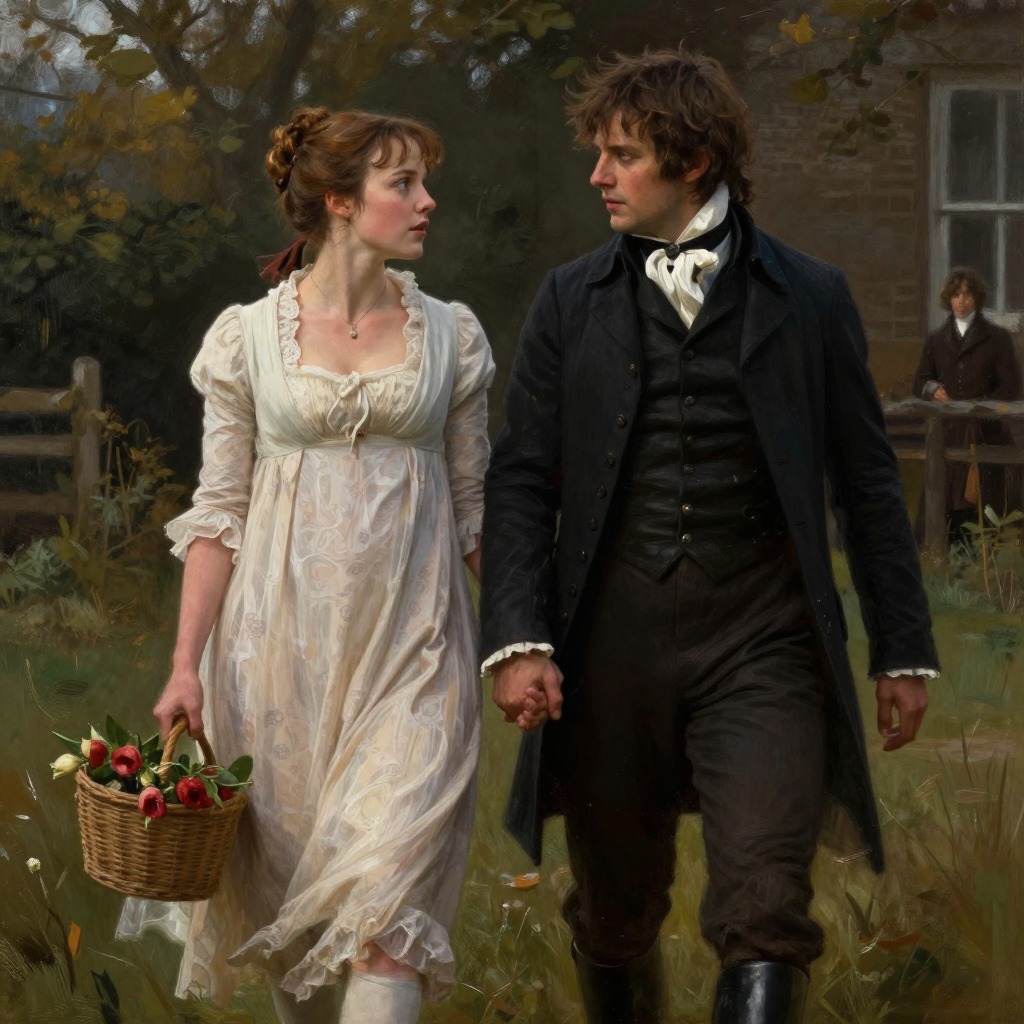
Meryton lies only one mile from Longbourn, a distance the Bennet sisters walk three or four times a week to visit their aunt, Mrs. Phillips, and a milliner's shop just over the way. The town is a small market town, and Sir William Lucas, who lives at nearby Lucas Lodge, made a tolerable fortune there in trade before rising to the honor of knighthood during his mayoralty. The Bennet sisters' uncle, Mr. Phillips, practices as an attorney in Meryton, having succeeded his father-in-law in the business. The town's proximity makes it a convenient destination for the younger Bennet sisters, Catherine and Lydia, who walk there to amuse themselves and gather conversation for the evening.
The Militia and Social Life
The arrival of a militia regiment to be quartered in Meryton for the winter brings a new source of excitement and interest. The regiment makes its headquarters in the town, and the officers quickly become the chief topic of conversation among the young ladies. Mr. Phillips visits all the officers, opening to his nieces a store of felicity unknown before. Lydia and Catherine can talk of nothing but officers, and their visits to Mrs. Phillips become productive of the most interesting intelligence about the officers' names and connections. The regiment's presence also brings George Wickham into the neighborhood; he is introduced to the Bennet sisters on the streets of Meryton by Mr. Denny, and his handsome appearance and pleasing address immediately captivate the young ladies. The town's streets and shops become the stage for chance encounters, including the tense meeting between Wickham and Fitzwilliam Darcy, who both change color upon seeing each other.
A Center for News and Gossip
Meryton functions as the primary conduit for news and rumor throughout the novel. It is where the Bennets learn of Mr. Bingley's arrival at Netherfield Park, where reports circulate about his fortune and intentions, and where the news of Lydia's elopement with Wickham first spreads. The town's inhabitants, including Mrs. Long and the Lucases, are the source of much of the intelligence that reaches Longbourn. After Lydia's marriage, the good news spreads quickly through the neighborhood, and the spiteful old ladies of Meryton offer good-natured wishes for her well-doing, though they consider her misery certain with such a husband. The town's gossip network also carries the report of Elizabeth's supposed engagement to Darcy, which reaches Lady Catherine de Bourgh through the Lucases' communication with the Collinses.
Narrative Significance
Meryton represents the confined and unvarying society of a country neighborhood, which Darcy initially dismisses as providing few subjects for the study of character. Yet it is precisely this limited social world that generates the novel's central conflicts and relationships. The town's proximity to Longbourn makes it the natural destination for the Bennet sisters' walks and errands, and its function as a gathering place for the militia creates the conditions for Lydia's disastrous attachment to Wickham. After the regiment leaves, Kitty is so recovered from her obsession with the officers that she can enter Meryton without tears, a sign of her gradual improvement. The town thus serves as both a stage for the novel's key encounters and a barometer of the characters' changing circumstances and fortunes.